


Last Thursday at a press conference, the District Attorney in Lycoming County announced two big arrests of drug dealers who were supplying much of north-central Pennsylvania with fentanyl, cocaine, and methamphetamine. Like in most press conferences, he held up the mugshots of the two ringleaders and displayed an impressive assortment of drugs that they seized as part of the investigation. But there was a bit of grandstanding that we think might be an empty threat.
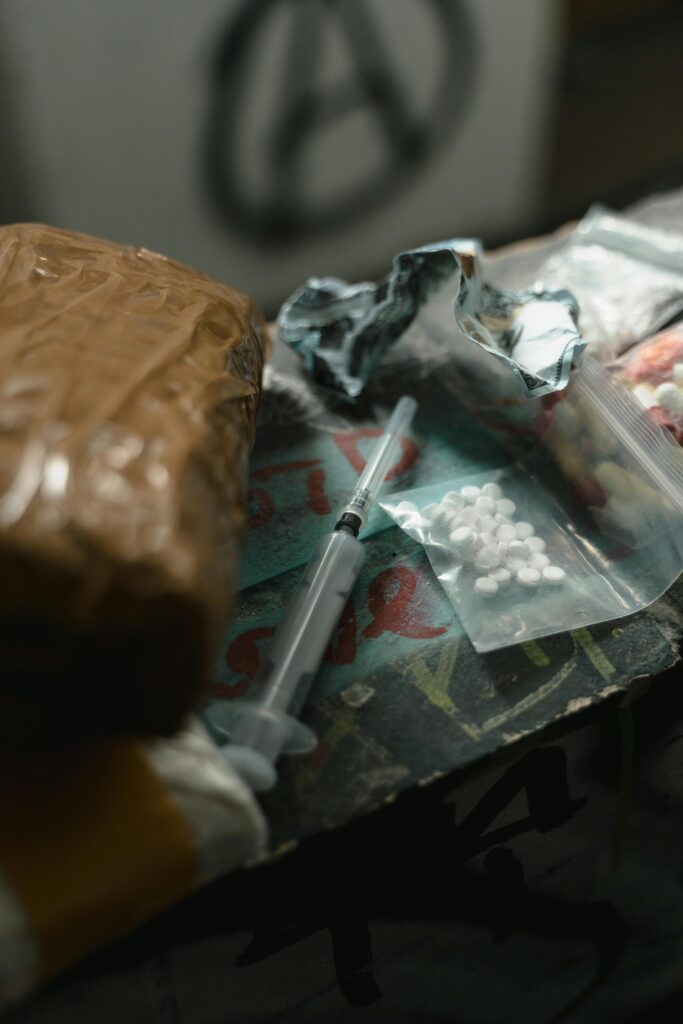
This particular DA announced that when somebody fatally overdoses on drugs in his county, and they’re able to track the fatal drugs to a particular dealer, they’re going to charge that dealer with First-Degree Murder. First-Degree Murder has a simple definition: it’s an “intentional killing” of another person. That means that it was a person’s specific goal to end another person’s life. It’s no secret that it’s really dangerous and reckless to sell heroin & fentanyl; fentanyl dealers usually aren’t doctors, and there’s no way of knowing how a user’s body will respond to whatever’s in that bag.
Our Superior Court has already said in Commonwealth of PA v. Kakhankham that it’s per se reckless to sell such drugs. But proving intentional conduct is going to probably be impossible unless somebody actually administers it to an unsuspecting victim as a poison.
Until about 15 years ago, charge-wise, prosecutors were stuck with (no pun intended!) a combination of Delivery of a Controlled Substance (a felony), and Involuntary Manslaughter (a misdemeanor). Sometimes the prosecution would pursue Third-Degree Murder but even that was nearly impossible; they would have to prove “malice,” which is conduct that’s so reckless that it presents an extreme and unjustifiable risk that somebody else could be seriously injured or killed. There was a “Drug Delivery Resulting in Death” on the books, but it required malice. And that’s why they re-wrote the law in 2011 and brought the proof requirement down to ordinary recklessness, which is basically a given in opioid cases now.
Of course we need law enforcement to keep the supply of these dangerous drugs down. But if Lycoming County actually follows through with this new policy, they won’t have any success. “Justice” looks different in each case; was this dealer a fellow user who just volunteered to go get the drugs and then shared, or was this a greedy profiteer who takes advantage of those suffering from addiction during their darkest times? The answer to this question should guide what penalties are on the table.
The Drug Delivery Resulting in Death law carries up to 40 years in prison, and if the factors are right, they can also pursue Third-Degree Murder which could carry an additional 40 years. These penalties are sufficient. Lycoming could be getting itself into some trouble, too. A First-Degree Murder charge means no bail, pending trial. So if they charge Murder-1 on a whim and somebody goes to jail at arraignment when he/she otherwise would not have, trouble could result all around.
If you or someone you know are facing drug charges of any kind, contact us at Fairlie & Lippy, P.C. so that our experienced team of defense lawyers can assist you from early in the case.













Or contact me privately:
steve@fairlielaw.com
(215) 997–1000